Free Local Installation & Delivery
.png)
Explore Our Builds


VX CamperBoxx V1 Prototype
2023 • High Roof Vans/Trailers
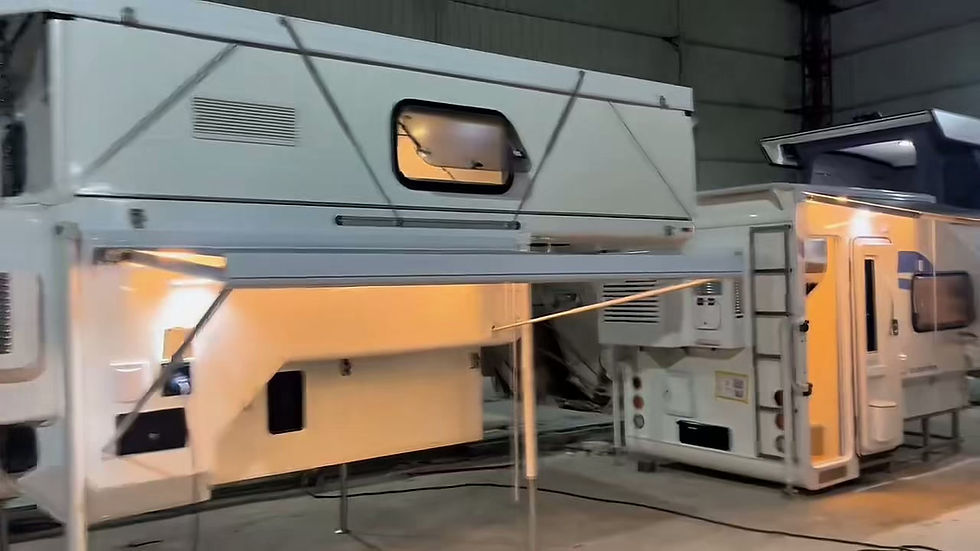
The one that started it all. Our goal with the original CamperBoxx was simple: create one of the most versatile campers possible, something compact enough to fit inside a van but also capable of being used on a trailer. For Version 1, we built it small enough to fit into almost any size van. It definitely got attention, but it also taught us a lot. There were plenty of things we would do differently. We made the unit a little too small, and the curved roof was originally designed to help with wind resistance when used on a trailer. The downside was that it took away even more interior headroom. Even with those limitations, the prototype turned a lot of heads and proved that the concept had potential. We knew right away there was a lot we wanted to improve, and many of those lessons shaped the versions that came after it. Eventually, the CamperBoxx caught the attention of Vegas Tiny Home. They saw value in it as an ultra-small tiny home and especially liked how versatile the concept was. Through that opportunity, we met some great people and eventually had the original prototype auctioned through one of their events. And yes, someone thought our very first prototype was cool enough to buy it. This build was far from perfect, but it was the project that started everything.


VX CamperBoxx V2 Prototype
2024 • High Roof Vans/Trailers
Bigger, better, and much closer to what we originally envisioned. After everything we learned from the first prototype, we knew the next CamperBoxx needed more space. For the 2024 version, we increased the overall width to use as much interior room as possible while still fitting between the wheel wells of the Sprinter, Transit, and ProMaster. We also extended the slide-outs further so the unit could open up even more when being used on a trailer. We upgraded the rolling track system, added electric jacks, improved the pop-up roof, and added more insulation. Overall, the entire unit felt much more refined and functional compared to Version 1. But we still found areas that needed improvement. The slide-outs needed a better way to lock and secure in place. The pop-up roof still needed more refinement, and even though the sleeping area was improved, the bed was really only comfortable for one person under about 6 feet tall. Even with those issues, Version 2 was a huge improvement and proved we were moving in the right direction. We learned more, improved the design, and kept pushing the idea further. We didn’t stop here.


VX CamperBoxx V3 Prototype
2025 • High Roof Vans/Trailers
By Version 3, we had learned a lot from the previous CamperBoxx builds and focused on correcting the issues we found in Version 2. This version was designed to be much more user friendly overall. We upgraded the lift control system with a remote, added better sealing around the slide-outs, improved the locking system, and made the slide locks adjustable so they could secure properly at different positions depending on the width of the van. We also redesigned the bed platform so it could sleep in two directions, giving taller users more room and making the sleeping setup much more practical for two people. The kitchen was improved with more usable counter space and swing-out extensions, making the interior feel more functional without increasing the overall footprint too much. Overall, Version 3 was about refinement. Instead of completely changing the concept, we focused on making the CamperBoxx easier to use, easier to adjust, and more comfortable in real-world use. Each version taught us something new, and V3 brought the design much closer to the system we originally wanted to create.


Lea's Camperboxx
2025 • Standalone/Tinyhome
Lea believed in the CamperBoxx concept early on, back when our original idea was to create one highly versatile unit that could work across different applications. Her original plan was to purchase the CamperBoxx, use it herself, and showcase what it could do. Over time, that changed completely. She began renting the unit out frequently as an Airbnb, and it quickly became a real income-producing setup. That experience taught us something important. The CamperBoxx was designed around versatility, especially being able to work in vans and on trailers, but Lea was using it almost entirely as a standalone unit. It worked, but it was not really optimized for that purpose. Her experience helped open the door for us to think beyond one universal design and start developing more dedicated builds specifically for standalone use. Lea’s unit is still a CamperBoxx, and one day we would love to upgrade her into something better suited for her Airbnb business — with more space, comfort, and features designed specifically to help improve the guest experience and her return on investment. Her build became more than just another CamperBoxx. It helped us see a completely new direction for what these units could become.


John's Camperboxx
2025 • Sprinter 170 Dually
John already had a full-time party bus setup in his Sprinter when he came across us on Instagram. He liked the versatility of the CamperBoxx right away because it gave him a way to add a camper setup without permanently changing the van. His goal was pretty unique. He wanted to use the camper for his annual trip to Burning Man, then remove it afterward and convert the Sprinter back into his party bus. The biggest challenge with this build was the dually wheel wells. They took up more interior width, which meant the main body of the CamperBoxx had to be narrowed so it could slide past them. We still made it work. We narrowed the main body of the unit, then extended the slide-outs farther so they could reach closer to the van walls once opened. This gave him more usable interior space without preventing the unit from being removable. We also intentionally did not build the CamperBoxx to use the full length of the van. John wanted to keep some open space behind the cab so he could still add a sofa and other accessories. This build was a good example of why we designed the CamperBoxx around flexibility. The van could serve two completely different purposes without forcing John to commit to a permanent conversion.


VX Flex Camper Prototype
2025 • Van,Truck,Trailer
The Flex model came from one question we kept getting over and over again: “Can the CamperBoxx fit in a pickup truck or a low-roof van?” We didn’t really want the answer to be no, so we decided to build a smaller version. The Flex used a very compact body with an extended pop-up roof to create more usable space once opened. The pod itself was only about 7 feet long by 3 feet wide, so yes, it was small. Somehow, we still managed to fit a shower, toilet, mini sink, and sleeping area inside. We honestly didn’t know if the idea was going to work when we started, but we wanted to see how far we could push the concept and respond to what people were asking for. It ended up being one of those fun experimental projects that taught us a lot. The Flex may or may not ever become a standard production model because around this time, we started moving away from trying to make one camper fit every application. Instead, we decided to open the door to more custom, built-to-order designs based on the customer’s vehicle, lifestyle, space, and intended use. The Flex helped us realize that sometimes the better answer isn’t making one product fit everything — it’s building the right product for the right customer.


Meera's Prebuilt Camper Kit
2026 • Sprinter 170
Meera found us while looking for a more affordable way to turn her van into a comfortable home on wheels. At the time, she was already living out of the van with a standard mattress and her personal belongings, but she wanted something that felt much more complete and livable. When she came to see the CamperBoxx in person, we both realized that the pod itself was going to feel too compact for the way she planned to use her van full time. That led us to a new idea. We asked if she would be interested in becoming the first customer for a completely different prototype: a modular camper kit built directly around the interior of the van, without permanently hiding wiring or plumbing behind the walls. Instead, the utilities would stay within the individual modules, allowing the system to remain more plug-and-play, serviceable, and easier to remove later. She liked the concept, and that became the beginning of our first full modular camper kit build. Once the project was completed, we learned one of the most important lessons we have had from any build. A full-time van setup has very different needs from a weekend camper. For someone carrying most of their personal belongings with them every day, storage becomes just as important as the bed, kitchen, shower, and utilities. Looking back, we realized the cabinetry and modules could have been designed taller and used more of the available vertical space. The layout worked as a camper, but it was not the right fit for Meera’s full-time lifestyle. In the end, we agreed that the best solution was to part ways, and we provided her with a full refund. This project became an important turning point for us. It taught us that a successful custom build starts with understanding much more than the vehicle. We need to understand how the customer actually plans to live in it. Full-time living, weekend travel, off-grid camping, work use, and recreational use can all require completely different priorities. Meera’s build helped shape the way we approach projects today: **understand the lifestyle first, then design the camper around it.** And when something is not the right fit, we believe in doing our best to make it right.


Alex's Prebuilt Camper Kit
2026 • Sprinter 144
Alex reached out because he wanted a non-permanent camper setup for his overland Sprinter that he and his wife could use for weekend trips and longer-distance travel. His needs were pretty straightforward: a comfortable sleeping setup, kitchen, toilet, and outdoor shower, while still keeping the van flexible enough to switch back into passenger mode when needed. That made our modular system a good fit. The goal was to keep everything easy to remove so Alex could restore the factory seats whenever he needed the extra passenger space, then reinstall the camper setup when it was time to travel again. This was a fun build for us because we also got to add a few custom touches. One of Alex’s requests was a fold-out table near the sliding door. It started as a simple idea, but once it came together, it turned out pretty badass and became one of our favorite details on the build. Overall, Alex’s Sprinter was a great example of what we want our modular camper systems to do: give someone a comfortable camper setup without permanently changing how they use their vehicle.


VX Riven Popup Truck Camper
2026 • Full Size Pickup
This was one of our more unique truck camper builds. The goal was to create something that still had the lower profile and versatility of a pop-up camper, but with better insulation, more weather protection, and a more solid interior than a traditional soft-wall setup. We built it with a hard-sided pop-up roof so the camper could stay lower while traveling, helping keep the center of gravity lower and making the overall setup feel more balanced on the road. Once parked, the roof could open up to provide full standing room and a more insulated living space. One of the most unique parts of this build was the bathroom. Instead of using a traditional shower pan, we designed the entire bathroom area as a fully waterproof wet floor with the gray tank integrated underneath the camper. This allowed us to use a fixed toilet and create a more functional wet bath without taking up unnecessary interior space. We also used waterproof aluminum cabinetry in the wet areas so the materials could better handle moisture and long-term use. Overall, this build was about combining the compact travel profile and lower center of gravity of a pop-up with the durability, insulation, and comfort of a hard-sided camper. It gave us a chance to experiment with a different style of truck camper and create something that felt more solid and usable without giving up the benefits of a pop-up design.


VX Bunkr Tiny Home
2026 • Trailer/Stand-Alone
We built the BUNKR specifically for the upcoming Disaster Expo because we wanted to see how small and portable we could make a real, usable living space. The idea was to create something that does not need a permanent foundation, can be leveled with jacks, and can still be moved or dropped onto a trailer without making the whole setup complicated. For the show, we wanted to demonstrate that a small unit can still feel practical and complete while staying easy to transport and set up. Long term, we see the BUNKR being used for things like temporary living, workforce housing, backyard space, and emergency situations where having something simple, movable, and ready to use makes more sense than building a permanent structure. Our plan is to keep developing the concept, improve the layout, and make it available in different sizes and configurations depending on how people actually want to use it.


VX Overland Popup Truck Camper
2026 • Midsize Trucks
We designed this overland camper to stay lightweight and work well with midsize trucks, while keeping the whole experience focused on being outdoors instead of spending all your time inside the camper. The interior is mainly there for sleeping, storage, and a little privacy when you need it. Cooking, showering, and other day-to-day functions can be handled through add-on attachments that pop out from the camper when you set up camp. The idea is to keep the camper itself simple, compact, and capable, while giving true overlanders and campers the freedom to build out their setup around how they actually like to travel and spend time outside.


VX Peak Popup Truck Camper
2026 • Trailer/Stand-Alone
VX Peak is a compact pop-up truck camper designed to give you a full-featured interior without the height and bulk of a traditional hard-side camper. The pop-up roof keeps the profile lower while traveling, then opens up at camp to create additional headroom and a more spacious living area. Inside, the VX Peak can be configured with an enclosed bathroom with toilet and shower, kitchen with sink, stove and refrigerator, sleeping area, dinette or seating, storage, water system, electrical system, heating and air conditioning. It’s designed for customers who want the comfort of a complete camper while still keeping the truck setup more compact and easier to travel with.